
Rules of Black Jack
History of Blackjack
Blackjack is one of the most unique, captivating, and strategically rich games in the world of casino gaming. Originating in French casinos in the 1700s, the game was first known as "Vingt-et-Un," which translates to "twenty-one" in French, a phrase that reflects the scoring system at the core of the game to this day. Originally played as a simple card game among French nobility and gamblers, Blackjack was a beloved pastime across Europe before eventually making its way to America, where it evolved into the game we know today. Today, the game exists in numerous popular variations — from classic American Blackjack to Spanish 21, European Blackjack, and countless casino-specific house rules — all of which share the same foundational structure of building a hand as close to 21 as possible in order to beat the dealer. Whether you are a complete beginner or a seasoned casino enthusiast, Blackjack offers an experience unlike any other, blending history, strategy, and excitement into one unforgettable game.

Objective of Blackjack
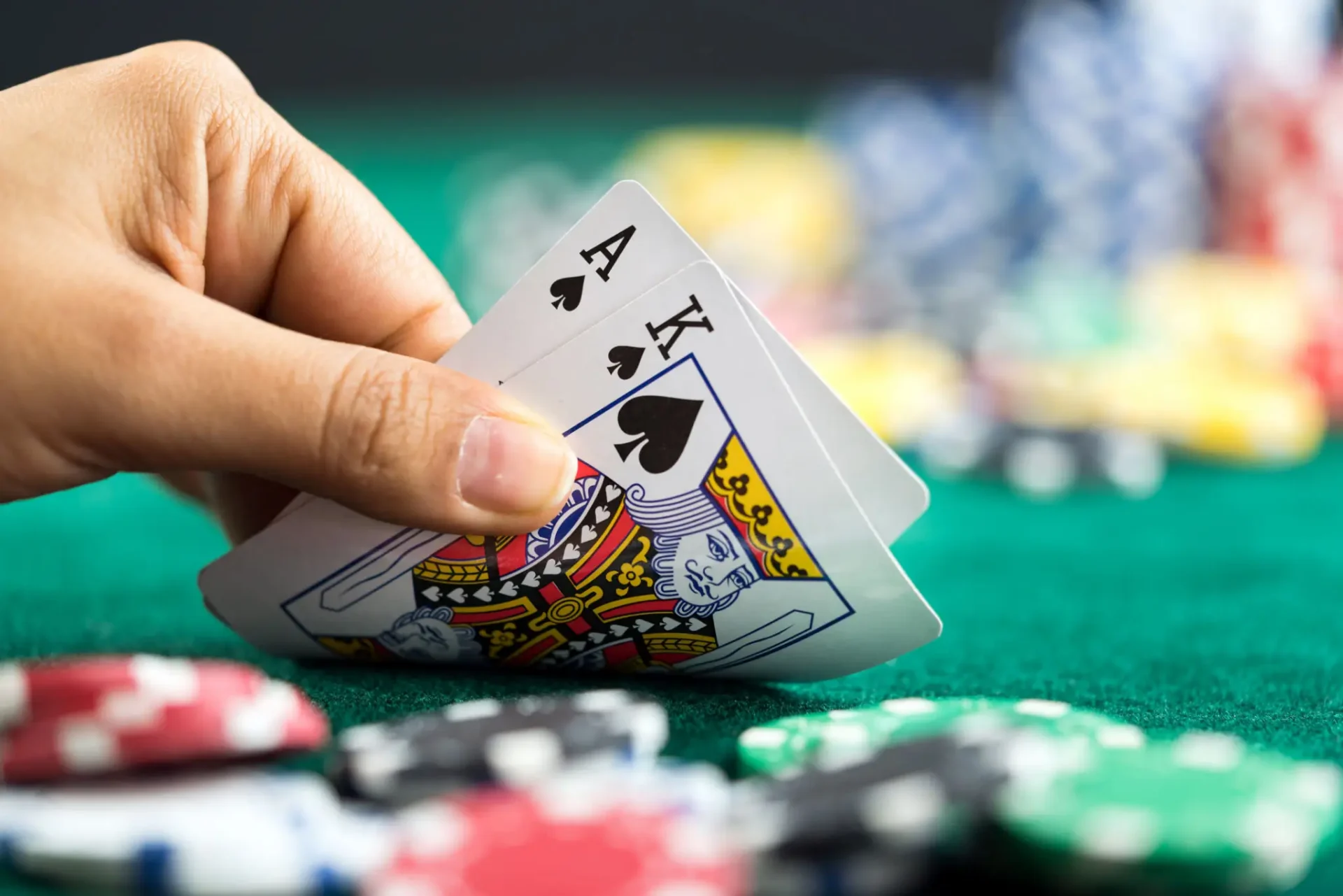
The objective of Blackjack, the most commonly played card game in modern casinos and casino-style events, is simple yet deeply strategic. Each player is dealt two cards from a standard deck (often a multi-deck shoe), and the goal is to build a hand total as close to 21 as possible — without going over — that beats the dealer's hand. Players can choose to hit, stand, double down, split, or surrender depending on their situation, and if a player's total exceeds 21, it results in an automatic loss known as a "bust." The Ace in the deck serves as a semi-flexible card that can count as either 1 or 11, and it automatically defaults to whichever value benefits the hand most without causing a bust. Beating the dealer's total results in a win for the player, matching the dealer's total results in a push or tie, and busting or being outscored by the dealer results in a loss — making every decision about whether to hit, stand, or double down a critical and exciting moment in the game.
Game Rules
How the Game Is Played
A round of Blackjack begins when all players at the table place their bets before any cards are dealt. Once the bets are placed, the dealer shuffles the deck (or shoe) and deals two cards to each player, typically face up, and two cards to themselves, with one card face down (the "hole card") and one face up. Players then take turns deciding how to play their hand — they can hit (take another card), stand (keep their current total), double down (double their bet in exchange for exactly one more card), split (if dealt a pair, separate them into two hands), or surrender (forfeit half their bet and end the hand early, where allowed). The goal is simple: get as close to 21 as possible without going over, while beating the dealer's total. Once every player has acted, the dealer reveals their hole card and plays out their hand according to a fixed set of rules — typically hitting on 16 or below and standing on 17 or above. The outcome of each hand is then determined — a win, a push, or a loss — and the next round begins. The pace of Blackjack can move quickly at a full table, but it still leaves room for players to think through their decisions, chat with fellow players, and enjoy the social energy of the game.
The Role of the Ace and Hand Values
One of the most distinctive elements of Blackjack is the flexible value of the Ace, which adds strategy and tension to nearly every hand. An Ace can count as either 1 or 11, whichever benefits the player's hand more at that moment — meaning a hand like Ace-6 can be an unbreakable "soft 17" rather than a fragile "hard 17." Card values in Blackjack are straightforward: number cards are worth their face value, face cards (Jack, Queen, King) are each worth 10, and the Ace is worth 1 or 11. The best possible hand is a Blackjack — an Ace paired with a 10-value card dealt as your first two cards — which typically pays out at 3:2. Beyond that, hands are simply ranked by their point total, with any hand over 21 automatically busting and losing regardless of what the dealer draws. One important nuance unique to many Blackjack variants is the distinction between "soft" hands (containing an Ace counted as 11) and "hard" hands (no Ace, or an Ace counted as 1) — understanding this distinction and knowing when a hand's value can shift is a key component of developing a strong Blackjack strategy, and mastering it can significantly improve a player's performance at the table.
Strategy and Tips for Winning
While Blackjack involves an element of luck, it is widely regarded as one of the most strategy-driven games in the casino, and players who take the time to learn proper basic strategy will find themselves at a significant advantage. The fundamental principle of a strong Blackjack strategy is to make the mathematically optimal decision for every hand based on your total and the dealer's up card — rather than relying on gut instinct or superstition. For example, if you are dealt a pair of Aces or a pair of 8s, it is generally advisable to split them rather than keeping them together, as this gives you a stronger chance of winning both resulting hands. When holding a strong doubling opportunity, such as a total of 11 against a weak dealer up card, doubling down should typically be used to maximize your potential payout. Beginners are often encouraged to follow a basic strategy chart — a mathematically derived guide showing the optimal play for every combination of player hand and dealer up card — as a reliable reference until they become more comfortable making independent decisions. Over time, with practice and experience, players develop an intuitive feel for the game that makes every hand a rewarding and intellectually stimulating challenge.
Why Blackjack Is Perfect for Events
Blackjack is not just an exceptional casino game — it is also one of the very best games to feature at a private party, corporate event, or fundraiser, and here is why. The game's fast-paced, high-energy rhythm creates an exciting, social atmosphere that encourages guests to interact, cheer each other on, and enjoy each other's company in a way that slower-paced games simply cannot replicate. Unlike more complex games that can feel intimidating to newcomers, Blackjack is approachable and easy to learn, making it ideal for guests of all experience levels — from first-time casino players to seasoned card sharks. The game's straightforward rules and quick hands also mean that players stay engaged from the very first deal, which is perfect for events where the goal is to keep guests entertained throughout the evening. Whether you are raising money for a worthy cause, rewarding your corporate team with a night of fun, or simply celebrating a special occasion with friends and family, Blackjack brings a level of energy, excitement, and genuine entertainment that elevates any event to an extraordinary experience. At Casino Event, we are proud to make Blackjack the centerpiece of every event we host, and we invite you to discover for yourself why this remarkable game has been captivating players at casinos around the world for generations.
Standard Blackjack Hand Values (Best to Worst)
Understanding hand values is essential for playing Blackjack. Here is a quick reference guide:
- Blackjack (Ace + 10-value card, dealt as your first two cards)
- 21 (Any combination of cards totaling exactly 21, after hitting or splitting)
- Soft Hands (Any hand containing an Ace counted as 11, e.g., Ace-6 = "soft 17")
- Hard Hands (Any hand totaling less than 21 with no Ace, or an Ace counted as 1)
- Pairs (Two cards of the same rank — eligible to be split into two hands)
- Push (Player and dealer totals are equal — bet is returned)
- ♠️ Bust (Any hand exceeding 21 — an automatic loss regardless of the dealer's hand)